You Won’t Believe What I Learned Exploring Invercargill’s Hidden Nature Reserves
New Zealand’s South Island is famous for Fiordland and Queenstown, but Invercargill’s protected areas are quietly stunning. I went to discover its reserves firsthand—and learned fast what *not* to do. From unexpected weather shifts to underprepared trails, the beauty comes with real challenges. This isn’t a polished tourist trail; it’s raw, wild, and demands respect. If you're planning a visit, here’s what actually matters on the ground. What I found wasn’t just untouched nature, but a deeper understanding of how to travel with awareness. Invercargill, often passed over by tourists rushing to more famous destinations, holds a quiet power—one revealed only to those who come prepared, move slowly, and listen closely to the land.
Why Invercargill? Setting the Scene Beyond the Beaten Path
Invercargill may not appear on every traveler’s must-see list, but its position at the southernmost tip of New Zealand’s South Island makes it a quiet gateway to some of the country’s most ecologically significant landscapes. While Queenstown dazzles with adventure tourism and Milford Sound draws crowds with its dramatic cliffs, Invercargill offers something different: access to vast, undisturbed wetlands and coastal ecosystems that pulse with life. This city of modest charm serves as a practical base for exploring conservation areas like the Waituna Wetlands and the Awarua Wetland, both recognized for their environmental importance. These reserves form part of a larger network of protected lands managed by the Department of Conservation (DOC), safeguarding habitats that support rare birds, native plants, and fragile aquatic systems.
What sets these places apart is their authenticity. Unlike the well-paved trails and visitor centers of more popular parks, Invercargill’s reserves feel unpolished and genuine. There are no souvenir shops, no tour buses, and rarely even another hiker in sight. The silence here is profound—not empty, but full of subtle sounds: the distant call of a pūkeko, the rustle of raupō in the wind, the soft gurgle of water through peat soils. For travelers seeking solitude and a true connection with nature, this region delivers in ways that busier destinations cannot. It’s not about spectacle; it’s about presence.
The ecological value of these wetlands cannot be overstated. The Awarua Wetland, designated as a Ramsar site of international importance, spans over 14,000 hectares and includes one of the largest remaining remnants of southern New Zealand’s lowland wetland ecosystems. These areas act as natural water filters, carbon sinks, and breeding grounds for native species. They also play a crucial role in climate resilience, absorbing floodwaters and stabilizing shorelines. Yet, despite their significance, they remain under-visited and often overlooked in national tourism narratives. This lack of attention, while making them feel more secluded, also means they rely heavily on local stewardship and informed visitors to remain protected.
For families, particularly women in the 30–55 age range who often plan and lead travel experiences, Invercargill offers a refreshing alternative to crowded destinations. It allows for meaningful outdoor engagement without the pressure of high-intensity activities or expensive guided tours. Whether walking a boardwalk at dawn or quietly observing birds from a viewing hide, the pace is gentle, the rewards deep. This is travel that nurtures the spirit, not just the itinerary.
The Reality of Weather: How One Storm Changed My Plans Completely
One morning, I set out for the Waituna Wetlands under clear skies, convinced the forecast had been overly cautious. Within hours, a wall of wind and rain rolled in from the Southern Ocean, turning what should have been a peaceful walk into a test of endurance. My lightweight jacket offered little protection, and the trail—already damp from recent rains—turned into a slick, muddy path. I had to cut the hike short, retreating to my car with soaked shoes and a humbled perspective. That single storm taught me more about traveling in Southland than any guidebook could.
The weather in this region is notoriously unpredictable. Coastal exposure, combined with the influence of Antarctic air masses, means conditions can shift rapidly, even in summer. A sunny morning can give way to gale-force winds by afternoon. This volatility isn’t just an inconvenience—it directly impacts safety, trail accessibility, and wildlife observation. Birds become less active in heavy rain, boardwalks can flood, and unsheltered paths become hazardous. Understanding and respecting these patterns is essential for anyone visiting Invercargill’s reserves.
Preparation is the key. I now always check the MetService and DOC alerts before any outing. I pack layered clothing: a moisture-wicking base layer, an insulating mid-layer like fleece, and a fully waterproof outer shell. Gaiters are essential for keeping mud and water out of boots, and a wide-brimmed hat helps in both wind and rain. I also carry a compact emergency blanket and a headlamp, even on day trips. These small items have proven invaluable when plans change unexpectedly.
The best time to visit is during late spring to early autumn—roughly October to April—when rainfall is slightly less frequent and temperatures are milder. However, even in these months, rain is never far away. Early mornings often offer the calmest conditions and the best light for photography and birdwatching. I’ve learned to embrace the weather as part of the experience, not something to fight against. There’s a quiet beauty in mist rising off the wetlands or rain tapping gently on the canopy. But that beauty is best appreciated when you’re dry, safe, and prepared.
Hidden Challenges in “Untouched” Nature: Trail Conditions and Access Issues
One of the biggest surprises during my visits was how poorly marked some trails are. At first, I assumed that because these were protected areas, the infrastructure would be well-maintained. But in places like the Awarua Plains, paths can vanish into tall grass, boardwalks end abruptly, and junctions lack signage. On one occasion, I followed what looked like a clear trail, only to find myself at the edge of a flooded area with no way forward. There was no one around to ask, and my phone had no signal. I had to retrace my steps carefully, realizing how easy it is to become disoriented in such flat, open landscapes.
These challenges aren’t flaws—they’re part of what makes these reserves authentic. But they demand self-reliance. The Department of Conservation provides detailed track notes and maps online, and I now make it a rule to download these before leaving home. Printed maps are still important; GPS devices and apps like Gaia GPS or the DOC Track app can be lifesavers, but batteries die, and signals fail. I always carry a physical map in a waterproof case and know how to read basic topography.
Another issue is seasonal access. Some trails are closed during nesting seasons or after heavy rains to protect sensitive habitats. These closures are not always well-publicized, so checking with the local DOC office in Invercargill before heading out is crucial. I’ve learned to treat every visit as a flexible plan, not a fixed itinerary. If a trail is closed, I look for alternatives—sometimes stumbling upon quieter, less-visited spots that feel even more rewarding.
Footwear is another critical factor. Regular hiking shoes may suffice on dry days, but in wet conditions, waterproof boots with good ankle support are essential. I once underestimated the mud and slipped on a slick boardwalk, narrowly avoiding injury. Now, I never leave without proper gear. These reserves reward respect—not just for the environment, but for the practical realities of exploring them.
Wildlife Wonders—and How Not to Disturb Them
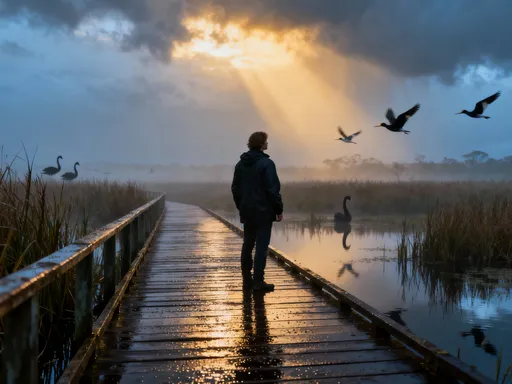
One of the most moving moments of my trip came at dawn in the Waituna Wetlands, when I spotted a group of paradise shelducks standing calmly at the water’s edge, their iridescent feathers glowing in the soft light. Nearby, a pair of Australasian bitterns moved silently through the reeds, nearly invisible until they shifted position. These encounters felt sacred, not because they were rare—though some species are—but because they happened on nature’s terms, not mine.
The biodiversity here is remarkable. The wetlands are home to over 90 bird species, including the endangered black-billed gull, the rare marsh crake, and the distinctive New Zealand fernbird. While the critically endangered kākāpō is not found in these exact reserves, nearby conservation programs on offshore islands are part of the same ecological story. The sun orchid, a delicate native flower, blooms briefly in summer, adding splashes of pink and purple to the grasslands. Every element of this ecosystem is interconnected, and human presence, no matter how well-intentioned, can disrupt it.
That’s why responsible behavior is non-negotiable. Staying on marked paths prevents trampling of fragile vegetation and nesting sites. Keeping a respectful distance from animals avoids stress and displacement. I never use playback calls to attract birds—a practice that can interfere with mating and territorial behaviors. Feeding wildlife is strictly prohibited and can lead to dependency or disease. These rules aren’t suggestions; they’re part of a broader commitment to conservation that every visitor must uphold.
The Department of Conservation runs education programs and volunteer initiatives to protect these species. I spoke with a local ranger who explained how predator control—using traps and monitoring—has helped native birds rebound in recent years. Tourism, when done right, supports these efforts through conservation fees and increased public awareness. But when done poorly, it can undo decades of work. The choice is in our hands.
Visitor Facilities: Don’t Expect Luxury (And Why That’s Okay)
If you’re used to well-equipped national parks with cafes, restrooms, and information kiosks, Invercargill’s reserves will feel refreshingly bare. Most sites have minimal infrastructure: a small parking area, perhaps a picnic table, and a basic toilet if you’re lucky. There are no cafes, no gift shops, and very limited mobile phone coverage. At first, I found this lack of amenities inconvenient. But over time, I came to see it as a gift.
Without distractions, attention turns inward and outward—toward the landscape, the sounds, the slow rhythm of nature. I pack everything I need: water, snacks, a thermos of tea, and a small first-aid kit. I use restrooms in town before heading out and bring hand sanitizer. I’ve learned to appreciate the simplicity. There’s a quiet dignity in sitting on a log, eating a sandwich while watching ducks glide across a lagoon, with no one else in sight.
Invercargill itself offers comfortable accommodations, from clean motels to cozy bed-and-breakfasts. The city has excellent supermarkets, pharmacies, and cafes—perfect for stocking up and refueling. I recommend using these town amenities as your base. Spend the night in a quiet guesthouse, prepare your gear, and start early. This rhythm—preparing in town, venturing into the wild, returning to comfort—creates a satisfying balance.
The lack of luxury isn’t a drawback; it’s a feature. It reminds us that nature doesn’t exist to serve our convenience. These reserves are not theme parks. They are living, breathing ecosystems that demand humility. Embracing that mindset leads to deeper, more meaningful experiences. It’s not about comfort—it’s about connection.
Local Insights: Talking to Conservation Workers and Longtime Residents
One of the most valuable parts of my journey was speaking with people who know these lands intimately. At the DOC visitor center, I met a ranger named Sarah who has worked in the region for over 15 years. She shared stories of how the wetlands have changed—some for the worse due to drainage and farming, but also signs of recovery thanks to restoration planting and community efforts. She emphasized that visitors play a role: every person who follows the rules, stays on track, and reports issues helps protect the area.
I also had a conversation with a longtime resident, Margaret, who grew up near the Awarua Wetland. She recalled how the area used to flood regularly, shaping the way her family lived. “We learned to live with the land, not against it,” she said. Her respect for the wetlands was evident, not as a tourist attraction, but as a living part of her identity. These personal stories added depth to my understanding, turning abstract conservation concepts into real human experiences.
Local volunteers often lead guided walks or restoration days, planting native species and removing invasive weeds. I joined one such event and was struck by the sense of pride and care in the group. These are not paid professionals, but people who give their time because they love this place. Their knowledge is practical and hard-won. One volunteer taught me how to identify different types of moss that indicate soil health—a small detail, but one that deepened my appreciation.
Engaging with locals transforms a simple visit into a richer, more responsible experience. It fosters empathy and encourages sustainable behavior. When you hear someone say, “We’ve worked ten years to bring the bittern back,” you think twice before stepping off the path. These conversations are not just informative—they’re transformative.
Putting It All Together: Planning a Smarter, More Rewarding Visit
Looking back, my initial missteps taught me what truly matters: preparation, respect, and presence. A rewarding visit to Invercargill’s reserves isn’t about seeing everything or ticking off a list. It’s about moving slowly, paying attention, and leaving no trace. I now begin every trip at the DOC visitor center in Invercargill, where staff provide up-to-date trail conditions, weather advice, and conservation updates. This small step has prevented multiple problems and enriched my experience.
I plan my outings around low-impact activities like birdwatching, photography, or quiet reflection. These allow me to engage deeply without disturbing the environment. I combine reserve visits with nearby cultural experiences—like visiting the Bluff oyster season in winter, when fresh seafood is celebrated locally, or stopping at Tiwai Point to learn about the aluminum smelter’s environmental monitoring efforts. These connections make the journey more holistic.
I always travel with the right gear, check the weather, and inform someone of my plans. I carry a physical map, even if I have GPS. I respect closures and follow all DOC guidelines. And perhaps most importantly, I go with curiosity, not expectation. When I do, I find that the land reveals itself in unexpected ways—a heron taking flight, a rare orchid blooming in the grass, a moment of stillness that stays with me long after I return home.
These reserves are not just scenic—they are sacred. They remind us of what nature can be when we step back and let it thrive. By avoiding common mistakes, we protect their future and open ourselves to experiences that are not just memorable, but meaningful. Travel like this doesn’t just take you to a place—it changes you. So go with care, with curiosity, and with the right boots. You’ll leave not just with photos, but with a deeper connection to the earth and to yourself.