Marseille Unfiltered: Where Urban Vibes Meet Coastal Soul
You know that feeling when a city just gets you? Marseille hit me like a wave—raw, real, and totally unfiltered. Forget polished postcard spots; this is where urban energy collides with Mediterranean soul. I’m talking sun-bleached streets, buzzing markets, and harbor views that take your breath away. If you're chasing authentic city spaces with edge and heart, you gotta check this out. This is Marseille, redefined—a place where history hums beneath cracked pavement, where fishermen still haul in the day’s catch beside art installations, and where every alley tells a story older than the guidebooks admit. It’s not always easy, but it’s always alive.
First Impressions: The Pulse of a Southern Gateway
Arriving in Marseille through Gare Saint-Charles is an experience in itself—an architectural crescendo that lifts travelers from underground tunnels into blinding Mediterranean light. The station, perched on a hill, forces a dramatic ascent, mirroring the city’s own climb from industrial port to cultural beacon. As visitors emerge, the vast expanse of the Canebière stretches ahead, a grand boulevard that once served as Marseille’s answer to the Champs-Élysées. Yet today, it pulses with a different energy—one of reinvention, resilience, and realism.
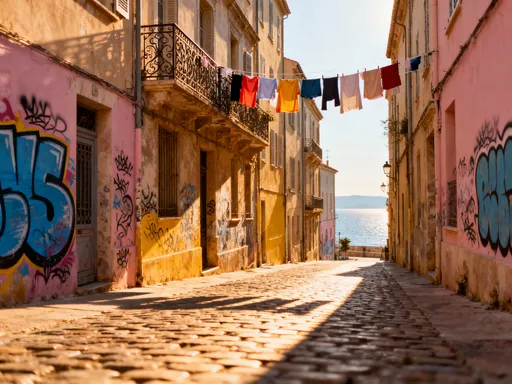
Unlike the carefully preserved facades of northern French cities, Marseille wears its age proudly. Crumbling cornices sit beside sleek renovations. Laundry hangs from wrought-iron balconies, and the scent of grilled sardines drifts from open kitchen windows. This is a city shaped by waves—both literal and metaphorical. Its natural amphitheater layout, cradling the Old Port between limestone hills, creates intimate microclimates where sea breezes cut through summer heat and sunlight bounces off whitewashed walls in golden flares.
The city’s geographic duality—land meeting sea, Europe meeting North Africa—has long influenced its character. Marseille is France’s oldest city, founded around 600 BCE by Greek settlers, and its DNA reflects centuries of cross-cultural exchange. Phoenician traders, Roman merchants, Italian immigrants, and North African communities have all left their mark. This layered identity isn’t curated for tourists; it’s lived daily in the cadence of Marseillais French, the rhythm of the markets, and the blend of architectural styles that line its streets.
First-time visitors often arrive with expectations shaped by stereotypes—either overly romanticized or unfairly stigmatized. But what they quickly discover is a city that defies simplification. Yes, there are challenges—uneven development, social disparities, pockets of neglect—but these coexist with extraordinary vitality. The true pulse of Marseille isn’t found in glossy brochures; it’s felt in the warmth of a shopkeeper offering a sample of tapenade, in the laughter spilling from a neighborhood café at dusk, in the way strangers exchange nods of recognition on a crowded tram.
Le Panier: The Beating Heart of Urban Revival
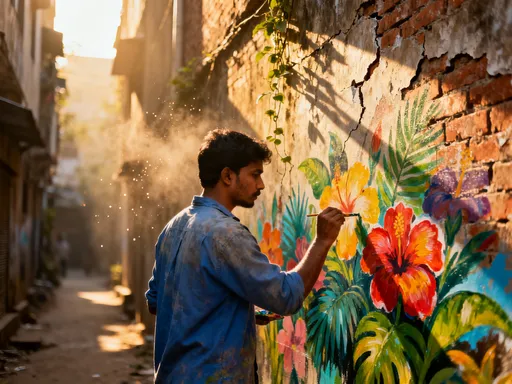
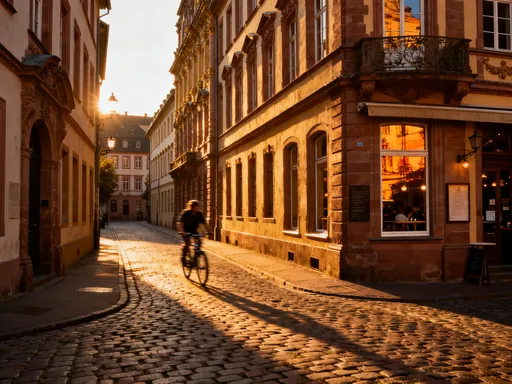
Nestled in the shadow of Marseille’s cathedral, Le Panier is the city’s oldest neighborhood and one of its most compelling transformations. Once a working-class district marked by decline and disinvestment, it has emerged as a symbol of grassroots urban renewal. Its narrow, winding streets—some too tight for cars—invite slow exploration. Cobbled lanes rise and fall with the terrain, revealing bursts of color at every turn: bougainvillea spilling over balconies, murals painted in bold geometric patterns, and facades restored with care by local artisans.
What makes Le Panier special isn’t just its aesthetic charm but its authenticity. This isn’t gentrification imposed from above; it’s revival driven by residents, artists, and small entrepreneurs who value community over commercialization. Independent boutiques sell handmade ceramics, locally woven textiles, and organic Provençal soaps. Micro-galleries showcase contemporary photography and abstract painting, often created by artists born and raised in Marseille. There’s a sense that creativity here isn’t performative—it’s necessary, rooted in the need to reclaim space and voice.
Place des Moulins, a small triangular square tucked within the maze, exemplifies this transformation. Once a forgotten corner, it now hosts weekend markets, live music, and community workshops. Children play while elders sip coffee at shaded tables. The square’s centerpiece—a centuries-old well—is no longer functional but remains symbolic, a reminder of how life once centered around shared resources. Nearby, street art transforms blank walls into open-air exhibitions. One mural depicts a woman weaving threads that morph into maps of Mediterranean trade routes, honoring the neighborhood’s maritime legacy.
The success of Le Panier lies in its balance. While tourism has increased, the focus remains on preserving local identity. Zoning policies encourage mixed-use spaces, preventing the area from becoming a museum piece. Residents still dominate daily life, and long-standing families continue to run corner bakeries and family-run cafés. This organic evolution offers a model for other cities: regeneration doesn’t require erasure. By investing in social fabric rather than spectacle, Le Panier proves that urban renewal can be both beautiful and equitable.
The Waterfront Reinvented: From Port to Public Playground
Marseille’s relationship with the sea has always defined its soul. For centuries, the Vieux-Port was the city’s economic engine—a working harbor where fishing boats docked at dawn and cargo ships loaded goods bound for North Africa and beyond. But by the early 2000s, the waterfront had become congested, polluted, and inaccessible to most residents. Cars dominated the quays, and public space was limited. That began to change in 2013, when Marseille co-hosted the European Capital of Culture title with Košice, Slovakia—an opportunity that sparked a comprehensive urban redesign.
The transformation of the waterfront prioritized people over vehicles. A major step was the construction of a pedestrian-friendly promenade along both sides of the harbor. The Quai du Port and Quai des Belges were repaved, widened, and lined with benches, bike lanes, and shaded seating areas. Traffic was rerouted underground, freeing up surface space for strolling, cycling, and gathering. The result is a vibrant public realm where locals fish from the edge, children chase pigeons, and couples share glasses of rosé at open-air terraces.
One of the most striking additions is the J4 site, a former industrial dock turned cultural plaza. Connected to the mainland by a footbridge, it now houses the Villa Méditerranée, a sleek glass building dedicated to Mediterranean dialogue and sustainable development. The plaza hosts outdoor exhibitions, film screenings, and community events, drawing diverse crowds throughout the year. Just across the water stands the MuCEM—the Museum of European and Mediterranean Civilisations—built on a former fort and linked to the mainland by a dramatic walkway. Its latticed concrete façade filters sunlight like a traditional mashrabiya, blending modern architecture with cultural symbolism.
These spaces don’t erase history—they reinterpret it. The MuCEM’s collections explore the complex web of Mediterranean civilizations, from ancient Phoenician settlements to contemporary migration patterns. The J4 plaza, once a symbol of industrial labor, now fosters intellectual and artistic exchange. Together, they demonstrate how cultural infrastructure can revitalize urban areas without displacing their essence. The success of this transformation lies in accessibility: entry to the MuCEM’s exterior spaces is free, and the surrounding areas are designed for lingering, not just passing through.
Hidden Courtyards and Rooftop Escapes: Discovering Vertical Life
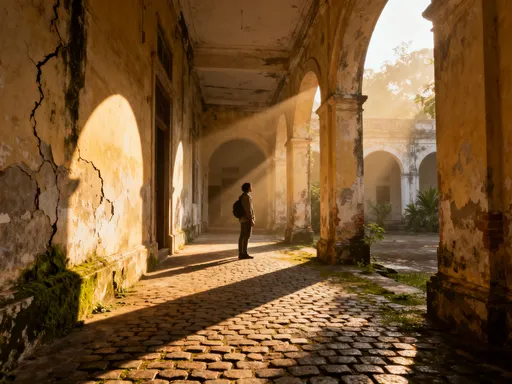
In a city where space is at a premium, Marseillais have mastered the art of vertical living. Beyond the streets and squares lie hidden layers of urban life—courtyards, stairwells, rooftops—that reveal the ingenuity of everyday adaptation. Known locally as *cours*, these interior courtyards are tucked within 18th- and 19th-century apartment buildings, often invisible from the outside. Once communal spaces for washing clothes, socializing, and drying laundry, many have been preserved as quiet sanctuaries amid the urban bustle.
Walking through certain neighborhoods—particularly in the 1st and 2nd arrondissements—one can glimpse these courtyards through open doorways. Some are lush with potted plants and climbing vines; others retain their original stone fountains, now silent but still symbolic. Though private, their presence contributes to the city’s sensory texture—the echo of voices, the scent of jasmine, the dappled shade of a plane tree. In recent years, preservation efforts have highlighted their cultural value, with some buildings opening their courtyards during heritage weekends.
Equally important are the rooftops. In districts like La Plaine and Noailles, flat roofs have become informal gathering spots. Families host Sunday meals under parasols, teenagers meet after school, and neighbors share stories as the sun sets over the harbor. These spaces aren’t formalized or regulated—they exist because people need them. Some buildings have installed simple railings and seating, but most remain raw, accessible only to residents. Yet their role in urban life is undeniable: they offer relief from dense housing, a place to breathe, to connect, to simply be.
This vertical dimension adds depth to Marseille’s urban experience. It reflects a culture that values intimacy and improvisation. While other cities build sky parks and rooftop bars, Marseille’s elevated spaces remain humble and human-scaled. They’re not designed for Instagram—they’re lived in. And in doing so, they challenge the notion that public life must happen at street level. True urban vitality, Marseille shows us, also unfolds above and behind closed doors.
Markets as Social Infrastructure: More Than Just Shopping
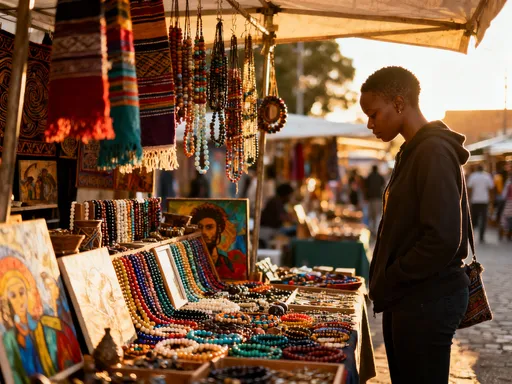
If streets are the arteries of a city, markets are its heart. In Marseille, they are not tourist attractions but essential infrastructure—spaces where food, conversation, and community intersect. The Marché des Capucins, often called the city’s largest open-air market, is a sensory explosion. Stalls overflow with blood oranges from Sicily, green figs from the Luberon, and glistening anchovies laid out on beds of ice. Vendors call out prices in rapid-fire French, punctuated by bursts of Arabic and Italian. The air hums with negotiation, laughter, and the occasional argument over ripeness.
What sets Marseille’s markets apart is their role as social hubs. They’re where news travels faster than Wi-Fi, where grandparents teach grandchildren how to pick the best melon, and where newcomers are welcomed with samples of olives or slices of fougasse. Unlike supermarkets, where transactions are silent and efficient, these markets thrive on interaction. A purchase isn’t complete until it’s accompanied by a comment on the weather, a joke about the mayor, or an update on a neighbor’s health.
The spatial design reinforces this culture of connection. Narrow alleys encourage close proximity. Shaded awnings create natural gathering zones. Central fountains provide resting spots and informal meeting points. In the Noailles district, the market spills into surrounding streets, blurring the line between commerce and community. Shops open early and close late, adapting to the rhythms of working families and shift workers. Even during economic downturns, these markets have remained resilient—proof of their centrality to daily life.
Local governments have recognized their importance, investing in structural upgrades while preserving their informal spirit. Renovations have improved drainage, lighting, and waste management without imposing sterile uniformity. The goal isn’t to sanitize but to support. In doing so, Marseille treats its markets not as relics but as living systems—dynamic, adaptable, and essential to the city’s social fabric.
Getting Around: The Rhythm of Movement and Access
Navigating Marseille is an exercise in layering—of terrain, transportation modes, and tempo. The city’s hilly topography means that movement is never purely horizontal. The metro, though compact, is efficient, connecting key districts like Castellane, Saint-Charles, and the Old Port. Line 1 runs north to south, cutting through diverse neighborhoods, while Line 2 loops eastward toward the coastal districts. Stations are clean, well-lit, and increasingly accessible, with elevators and tactile guidance for visually impaired travelers.
But the metro only tells part of the story. Buses and trams extend the network into hillside communities like Belle de Mai and Les Baumettes. The tramway, expanded in the 2010s, runs along major corridors, reducing car dependency and improving air quality. In the city center, pedestrianization has transformed the experience of moving through space. The Vieux-Port area is now largely car-free, with trams and cyclists sharing the promenade. This shift has made the waterfront safer and more inviting, encouraging people to linger rather than pass through.
Yet the most revealing way to experience Marseille is on foot. Walking allows travelers to feel the city’s textures—the cool stone of an ancient wall, the sudden gust of sea wind at a street corner, the uneven rhythm of cobblestones underfoot. Neighborhoods unfold gradually: a hidden chapel in a quiet alley, a burst of graffiti on a fire door, the aroma of cumin and garlic from a family-run couscous shop. Signage is minimal in some areas, inviting exploration without rigid itineraries.
Urban planning choices have increasingly prioritized walkability and multimodal access. Bike-sharing programs have expanded, with docking stations near parks and transit hubs. Sidewalks have been widened in key areas, and traffic calming measures—like speed bumps and narrowed lanes—have made streets safer for pedestrians. These changes reflect a broader philosophy: that mobility isn’t just about getting from point A to B, but about how people experience the journey. In Marseille, movement is part of the city’s soul.
Why Marseille Matters: A Model for Authentic Urban Living
As cities around the world chase sleek, homogenized visions of modernity—glass towers, sterile plazas, algorithm-driven services—Marseille stands as a powerful counterpoint. Its strength lies not in perfection but in presence. It doesn’t hide its cracks; it lets them tell stories. Graffiti isn’t erased—it’s celebrated. Markets aren’t sanitized—they’re amplified. History isn’t packaged—it’s lived. In an era of urban anxiety, Marseille offers a different path: one rooted in authenticity, resilience, and human connection.
What makes the city a model for others is its organic approach to urban life. Change hasn’t come from top-down mandates but from collective action—artists reclaiming spaces, residents demanding better public areas, small businesses shaping neighborhood character. The result is a city that feels earned, not engineered. There’s a humility to Marseille, a refusal to pretend it has all the answers. And in that honesty lies its power.
Its cultural hybridity—shaped by centuries of migration—isn’t treated as a challenge but as a source of richness. Languages blend, cuisines merge, traditions adapt. This isn’t forced diversity; it’s natural coexistence. And in a global climate where cities often struggle with inclusion, Marseille demonstrates that integration doesn’t require assimilation. People can belong without becoming the same.
Moreover, the city’s commitment to public space—whether through waterfront redesign, market preservation, or courtyard protection—shows that urban quality isn’t measured by luxury but by accessibility. The best spots aren’t gated or ticketed; they’re open, shared, and free. They belong to everyone and no one. That generosity of spirit is rare—and deeply needed.
Marseille teaches us that true urban vitality isn’t built. It grows. It emerges from the ground up, nurtured by time, trust, and tenacity. It’s messy, unpredictable, and imperfect. But it’s alive. And for those who seek cities with soul—not just sights—Marseille isn’t just a destination. It’s a revelation.