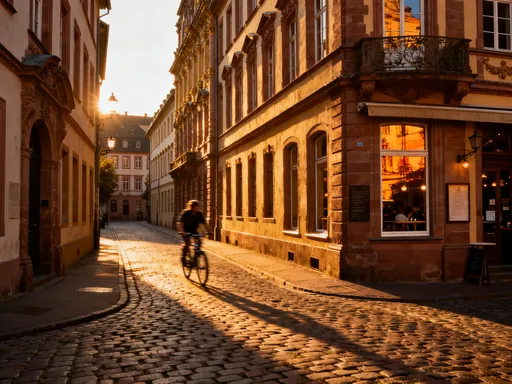
Alpine Elegance Uncovered: A Road-Trip Revelation Through St. Moritz’s Architectural Soul
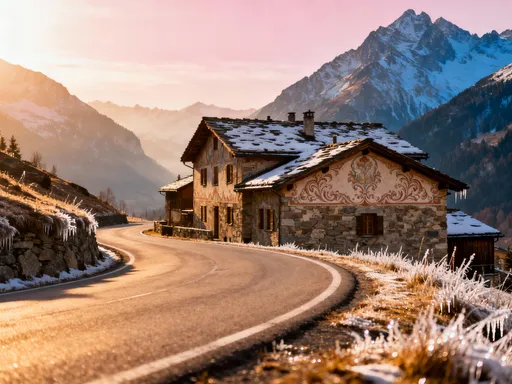
Driving into St. Moritz feels like entering a living postcard where snow-dusted peaks meet timeless design. I never expected architecture to steal the show, but here, every chalet tells a story—of Engadin tradition, alpine resilience, and quiet luxury. As I navigated winding mountain roads, the stone facades and sgraffito walls stood out like art in motion. This journey wasn’t just about the destination; it was about discovering how culture shapes the way buildings breathe in the mountains. The crisp air, the silence broken only by distant cowbells, and the golden light reflecting off centuries-old walls created a rhythm that felt both ancient and immediate. In that moment, I realized this was more than a scenic drive—it was an invitation to witness how people have lived in harmony with the high alpine world for generations.
The Road to St. Moritz: Why Driving Elevates the Experience
Reaching St. Moritz by car transforms a simple journey into a curated exploration of alpine grandeur and hidden architectural gems. Whether departing from Zurich or crossing the border from northern Italy via Milan, the drive unfolds through a sequence of breathtaking landscapes—rolling green foothills giving way to jagged limestone cliffs, mirrored lakes, and high-altitude meadows dusted with wildflowers in summer or blanketed in snow during winter months. The Swiss and Italian road networks leading to the Engadin Valley are well-maintained and clearly marked, with the A13 motorway from Zurich offering a smooth, efficient route, while the Stelvio Pass from Milan presents a more dramatic ascent with over 40 hairpin turns that reward drivers with panoramic views at every bend.
What makes driving particularly rewarding is the autonomy it grants travelers. Unlike train or flight itineraries, which follow fixed schedules and routes, a self-guided road trip allows for spontaneity. You can pause at roadside chapels tucked into forest clearings, stop at family-run bakeries in small villages like Savognin or Tiefencastel, or linger at mountain overlooks where the morning mist still clings to the valley floor. These unplanned moments often become the most memorable—especially when they lead to unexpected encounters with local architecture. A single detour down a narrow lane might reveal a centuries-old farmhouse with hand-carved wooden eaves or a restored granary adorned with traditional sgraffito patterns.
Moreover, driving enables deeper access to remote settlements that public transport rarely services. Villages such as Susch or Ardez, nestled deep within the Upper Engadin, maintain a slower pace of life and preserve architectural integrity better than more accessible towns. By car, visitors can approach these communities on their own terms, timing visits to avoid peak tourist hours and experiencing the quiet dignity of alpine life. The ability to carry luggage, outdoor gear, or even locally purchased crafts also adds practical value. For those seeking a meaningful connection with place, the road becomes not just a path, but a medium through which understanding unfolds—one kilometer at a time.
First Impressions: Arrival in a Village Where Stone and Style Unite
As the final stretch of road descends into St. Moritz, the village emerges like a composition of light and texture. Sunlight dances across slate roofs, their dark surfaces absorbing warmth while shedding heavy snow with ease. Whitewashed stone walls glow in the alpine clarity, contrasting sharply with deep-brown timber frames and intricately carved balconies. The air carries a faint scent of pine and woodsmoke—a sensory prelude to the architectural richness ahead. Even from the main thoroughfare, it’s evident that St. Moritz is not merely a resort town, but a place where design and environment are in constant dialogue.
The visual harmony between built form and natural setting is immediate and profound. Houses are oriented to capture southern exposure, their compact footprints minimizing wind resistance while maximizing solar gain. Gardens are modest, often enclosed by low stone walls that echo the geology of the region. Public spaces—such as the promenade along Lake St. Moritz—are designed with restraint, allowing the surrounding mountains to dominate the skyline without competition. This humility in scale and material choice reflects a deep respect for the landscape, ensuring that no structure overshadows the majesty of Piz Nair or the stillness of the frozen lake in winter.
Several landmark buildings greet visitors before they even reach the town center. The Badrutt’s Palace Hotel, with its turreted silhouette and grand façade, stands as a symbol of late 19th-century alpine elegance, blending Victorian influences with local craftsmanship. Nearby, the St. Moritz Church—its bell tower rising above chestnut trees—displays a fusion of Romanesque solidity and Protestant simplicity. Even modern additions, such as the segmented glass façade of the Segantini Museum, are carefully integrated, using reflective surfaces to mirror the sky and soften their presence. These early impressions set the tone for a journey focused not on opulence, but on authenticity—the kind rooted in centuries of adaptation, survival, and artistry.
Engadin Heritage: The Heartbeat Behind the Walls
The architecture of the Engadin Valley is not a style borrowed from elsewhere—it is a language born of necessity, refined over centuries. At its core lies a response to one of Europe’s harshest climates. Winters here are long and severe, with temperatures regularly dropping below -20°C and snowfall accumulating for months. To endure these conditions, early inhabitants developed a distinctive building tradition characterized by thick stone walls, small windows, and inward-facing layouts that shielded interiors from biting winds. These homes were not designed for display, but for survival—yet within their functional framework, a deep cultural identity took shape.
One of the most striking features of traditional Engadin houses is the use of sgraffito—a decorative technique involving layered plaster scratched away to reveal contrasting colors beneath. Originating in the Renaissance period, sgraffito became widespread in the region by the 17th century, often depicting religious motifs, floral patterns, or geometric symbols believed to bring protection and prosperity. A single façade might feature a sunburst above the doorway, a grapevine wrapping around a window frame, or a Latin inscription blessing the household. These designs were not merely ornamental; they communicated values, faith, and social status in a largely pre-literate society.
The inward orientation of many historic homes also speaks to communal living practices. Families often lived in multi-generational clusters, with stables and storage rooms surrounding a central courtyard. This arrangement conserved heat and created a protected microclimate, essential during months when venturing outside was limited. Roofs were steeply pitched to prevent snow buildup, typically covered in locally quarried slate or wooden shingles treated with natural resins for durability. Inside, massive stone hearths served as the heart of the home, radiating warmth and functioning as cooking centers. Every element—from the placement of ventilation slits to the choice of larch wood for structural beams—was informed by generations of accumulated knowledge.
Today, many of these traditional homes remain in use, some carefully restored, others adapted for contemporary needs. Their continued presence is a testament to the resilience of Engadin culture and the enduring logic of vernacular design. More than relics, they are living structures that continue to teach lessons about sustainability, community, and the quiet beauty of functional art.
Modern Meets Mountain: Contemporary Architecture in Dialogue with Tradition
While the Engadin Valley honors its architectural past, it does not remain frozen in time. In recent decades, a new generation of architects has embraced the challenge of designing for the alpine environment with sensitivity and innovation. Rather than imposing foreign aesthetics, many contemporary projects engage in a quiet dialogue with tradition, using modern materials and techniques to reinterpret local forms. The result is a built environment where glass, steel, and concrete coexist with stone and timber, creating structures that feel both current and contextually grounded.
A prime example is the San Spiert Cultural Center in the village of Zernez, located just west of St. Moritz. Designed by a Swiss architectural firm known for its minimalist approach, the building features a low-slung profile, earth-toned stone cladding, and large glazed sections that frame views of the surrounding peaks. Its roofline echoes the gabled forms of nearby chalets, yet the interior spaces are open and fluid, accommodating exhibitions, performances, and community gatherings. What sets the design apart is its restraint—there is no attempt to dominate the landscape, but rather to nestle into it, much like the historic farmhouses that inspired it.
Another notable project is the adaptive reuse of old barns and stables into private residences, studios, and boutique accommodations. In villages like S-chanf and La Punt, former agricultural buildings have been transformed with careful insertions of modern elements—steel-framed windows, polished concrete floors, and energy-efficient insulation—while preserving original stone walls and wooden trusses. These renovations demonstrate how heritage and innovation can coexist, offering functional living spaces without erasing historical character.
Sustainability is a central concern in contemporary alpine architecture. Many new constructions incorporate passive solar design, geothermal heating, and rainwater harvesting systems to reduce environmental impact. Materials are often sourced locally—larch wood from regional forests, stone from nearby quarries—minimizing transportation emissions and supporting the local economy. Architects also pay close attention to snow loads, wind patterns, and solar exposure, ensuring that buildings perform well under extreme conditions. The guiding principle is not novelty for its own sake, but thoughtful integration: innovation that respects context, enhances livability, and contributes to the long-term stewardship of the alpine environment.
Hidden Corners: Off-the-Beaten-Path Villages Worth the Detour
Beyond the polished charm of St. Moritz lie smaller villages that offer even deeper insights into Engadin architectural heritage. These settlements, often bypassed by mass tourism, have preserved their historic character with remarkable fidelity. Among them, Zuoz, S-chanf, and Guarda stand out as exemplars of regional design, each with its own personality and architectural nuances. Reaching them requires a willingness to leave main roads and navigate narrow mountain lanes, but the rewards are profound—a chance to experience alpine life as it has been shaped by centuries of tradition.
Zuoz, situated about 20 kilometers northeast of St. Moritz, is renowned for its well-preserved old town. Cobblestone streets wind between towering stone houses adorned with elaborate sgraffito and carved wooden portals. The village church, with its onion-shaped dome and frescoed interior, dates back to the 12th century and remains a spiritual and cultural anchor. Many homes feature “Heuberg” systems—elevated hay lofts supported by wooden stilts—once used for drying and storing fodder, now often converted into reading nooks or artist studios. Parking is limited but available on the outskirts, and walking is the best way to appreciate the village’s intimate scale and craftsmanship.
S-chanf, nestled along the Inn River, offers a more rugged aesthetic. Here, buildings are built to withstand heavy snowfall and strong winds, with lower profiles and robust construction. The local school, designed in the late 20th century, blends modern functionality with traditional materials, its stone base and wooden cladding echoing nearby homes. A short drive from S-chanf leads to the starting point of the Muottas Muragl hiking trail, where a historic funicular railway ascends to panoramic viewpoints—another example of infrastructure designed with both utility and scenic appreciation in mind.
Guarda, perhaps the most photogenic of the trio, is a designated heritage site where strict preservation laws govern renovations. Every house on its main street displays intricate sgraffito, often restored by artisans trained in traditional methods. Murals depict everything from biblical scenes to pastoral life, their colors softened by time and weather. Narrow alleys branch off the central lane, revealing hidden courtyards and ancient wine cellars. Drivers should note that the final approach to Guarda involves a steep, winding road with limited turnaround space, best navigated in daylight and dry conditions. Once parked, the village invites slow exploration, rewarding attentive visitors with details easily missed at first glance.
Design in Detail: What Makes These Buildings So Memorable
To understand the enduring appeal of Engadin architecture, one must look closely at its details—those subtle elements that transform functional necessity into aesthetic beauty. The gabled roof, for instance, is more than a stylistic choice; its steep pitch ensures that snow slides off naturally, preventing structural strain. Yet the rhythm of these roofs, rising and falling across a village skyline, creates a visual cadence reminiscent of mountain peaks. Similarly, wooden balconies—often overflowing with geraniums in summer—are not merely decorative. They serve as transitional spaces, allowing residents to enjoy fresh air without fully venturing outside, a practical feature in unpredictable weather.
Ornate doorways are another hallmark of the region’s design vocabulary. Carved from larch or pine, these portals often feature geometric patterns, family initials, or symbolic motifs such as the sun or the Maltese cross. Positioned at the threshold between private and public realms, they convey identity and welcome. Above many doors, small stone tablets inscribe the year of construction or the name of the builder, a quiet testament to pride in craftsmanship. Even functional elements like ventilation grilles or water spouts are sometimes shaped into animal figures or stylized leaves, blending utility with whimsy.
Material selection further underscores the region’s architectural intelligence. Local stone—typically a grayish granite or schist—is used for foundations and lower walls, providing thermal mass that stabilizes indoor temperatures. Larch wood, resistant to rot and insects, is favored for beams, shingles, and cladding. These materials age gracefully, their colors deepening over time, creating a patina that speaks of endurance. Inside, floors are often made of wide-plank pine, worn smooth by generations of footsteps, while ceilings are left exposed to showcase the honesty of timber framing.
What ties these details together is the culture of craftsmanship they represent. Building in the Engadin has long been a communal endeavor, with skills passed down through families and apprenticeships. Masons, carpenters, and sgraffito artists are not just tradespeople but custodians of tradition. Their work reflects values of patience, precision, and respect for materials—qualities increasingly rare in an age of mass production. To walk through these villages is to witness a living archive of human ingenuity, where every stone and beam tells a story of adaptation, care, and continuity.
Why This Journey Matters: Architecture as a Lens for Cultural Travel
Traveling through the Engadin Valley with an eye for architecture transforms the experience from passive sightseeing to active engagement. Instead of merely photographing picturesque scenes, one begins to read the landscape as a narrative of human resilience, cultural identity, and environmental adaptation. The thick stone walls speak of winter survival; the sgraffito patterns whisper of faith and folklore; the careful orientation of homes reveals an intimate understanding of sun and wind. These buildings are not static relics—they are records of lived experience, shaped by generations who knew how to build not just for beauty, but for belonging.
This kind of awareness fosters a deeper, more responsible form of tourism. When visitors appreciate the significance of local design, they are more likely to respect preservation efforts, support community-led initiatives, and choose accommodations that honor regional aesthetics. They may seek out guided walks with local historians, purchase crafts from artisan workshops, or simply observe with greater mindfulness. In doing so, they contribute to the sustainability of these villages, not just environmentally, but culturally.
Moreover, architectural travel encourages slowness—a counterpoint to the hurried pace of modern life. There is no rush to “see it all” when every façade invites closer inspection, every alleyway holds a hidden detail. The road trip from Zurich or Milan becomes a meditation, the winding mountain passes a metaphor for the journey inward. By the time one turns the car toward home, the landscape has changed—not because the mountains have moved, but because the way of seeing has.
The souvenirs collected are not trinkets from gift shops, but impressions etched into memory: the texture of aged stone under fingertips, the play of light on a sgraffito sunburst, the silence of a village at dawn. These moments linger, shaping a quieter, more meaningful understanding of place. In the end, the journey through St. Moritz and its neighboring villages is not just about discovering alpine elegance—it is about remembering that how we build reflects who we are, and that beauty, when rooted in purpose and tradition, endures long after the road fades behind us.